The Mystery of Blurred Faces in Dreams: Uncovering the Hidden Meaning
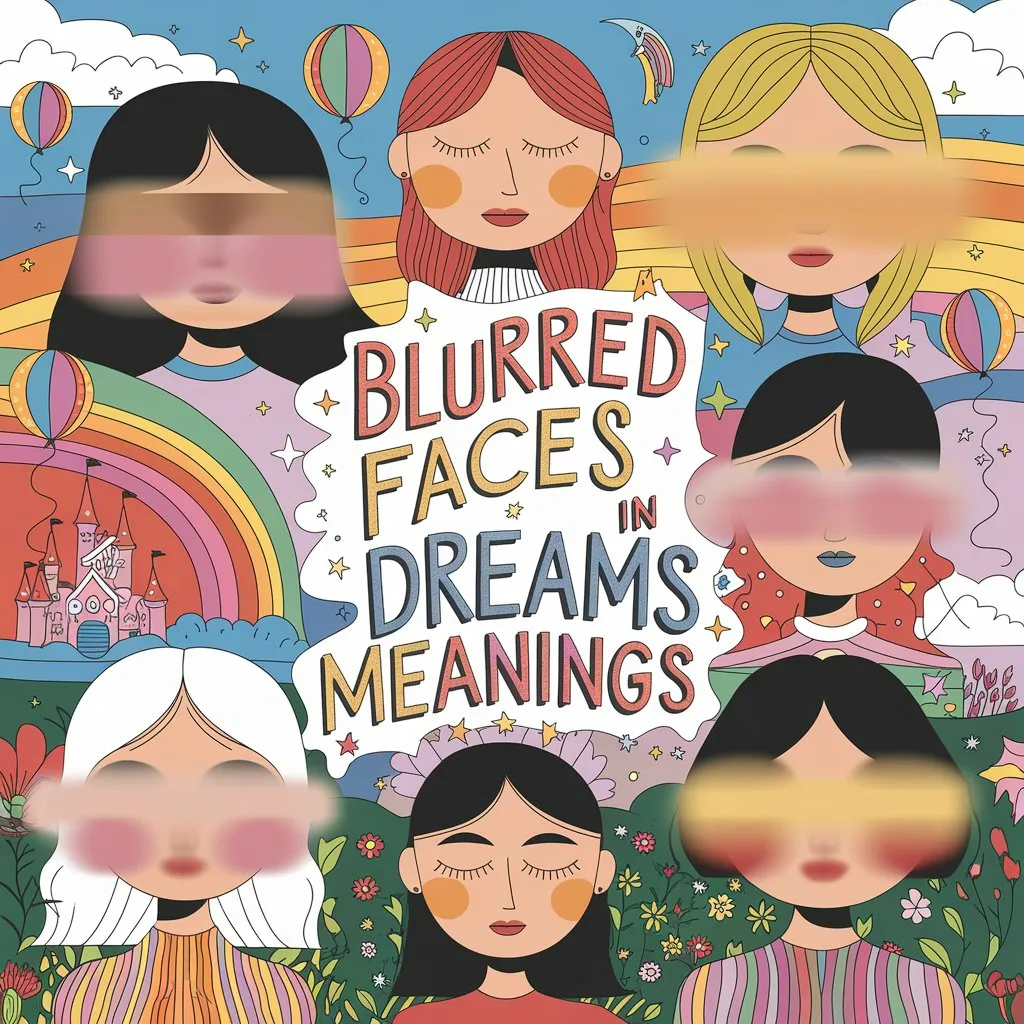
You’ve experienced it before – a dream where everyone’s face is a blur, leaving you with a sense of disconnection and unease. But what does it really mean? Are you struggling to find your place in a crowded world, or is your mind trying to tell you something more?
As you reflect on the emotions and sensations that linger long after you wake, you can’t help but wonder: what’s behind the blur? Is it a reflection of your own fears, desires, or something deeper? The answers may lie just beneath the surface, waiting to be uncovered.
At a Glance
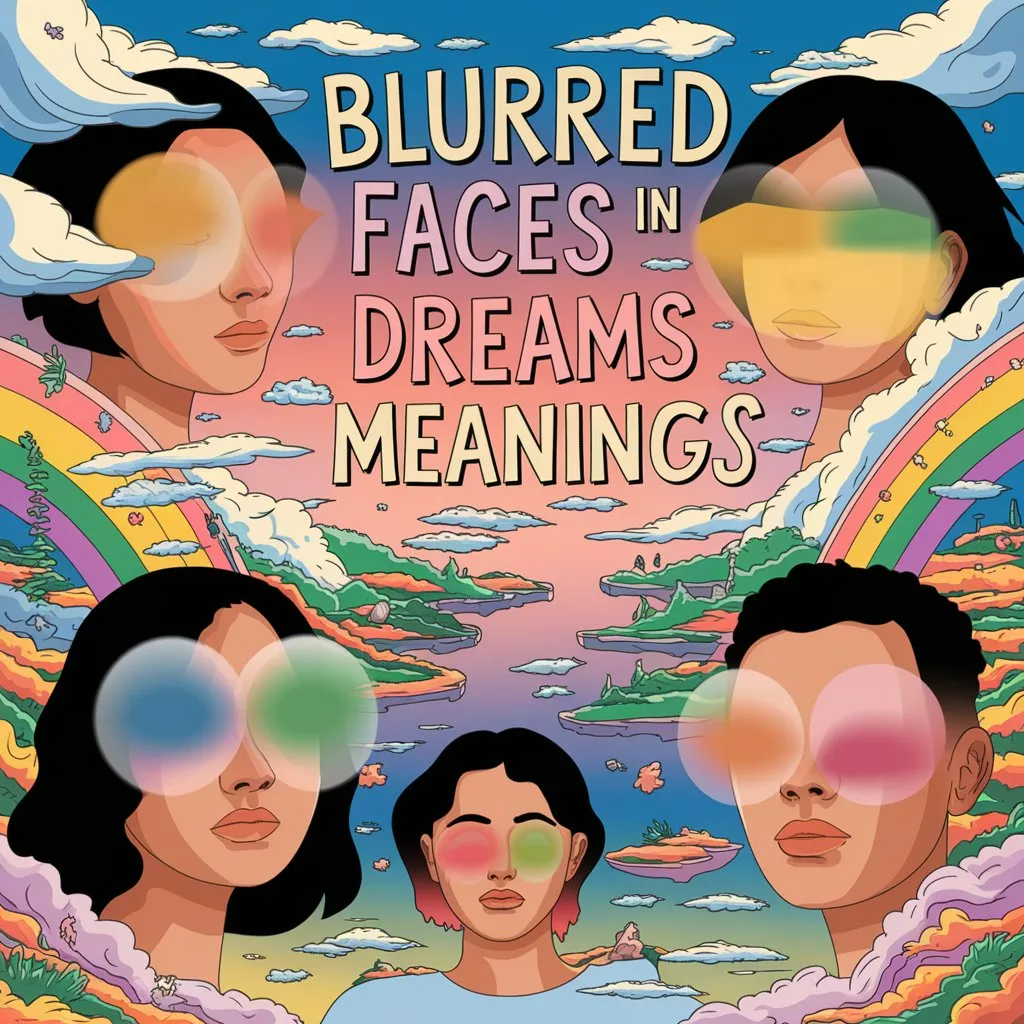
- Blurred faces in dreams symbolize struggles with social identity, feeling overwhelmed, or a desire for anonymity and blending in with the crowd.
- This phenomenon may indicate disconnection from one’s identity, uncertainty about one’s role, or feeling like a cog in a machine.
- Emotions experienced during the dream can suggest grappling with questions about one’s sense of belonging or purpose.
- The brain’s inability to recognize a face can evoke a primal fear response, triggering feelings of disorientation and unease.
- Examining emotions behind the blur in dreams can provide insight into the subconscious mind and emotional significance assigned to people in one’s life.
Deciphering the Blurred Face Phenomenon
As you plunge into the domain of dreams, you may have noticed a peculiar phenomenon: faces that were once familiar and clear become distorted and blurred.
This can be unsettling, especially when it involves people you’re close to, like family members or friends. But what does it mean?
In the sphere of dream symbolism, faces often represent aspects of yourself or your relationships with others.
A blurred face can signify a sense of disconnection or uncertainty about your own identity or the role you play in someone’s life. It may indicate that you’re struggling to find your place within a particular group or community, leading to a faceless identity.


Consider the emotions you experience during the dream.
Are you feeling anxious or confused? This could suggest that you’re grappling with questions about your own sense of belonging or purpose.
Alternatively, if you feel a sense of relief or detachment, it might indicate a desire to break free from expectations or constraints imposed by others.
Fear of the Unknown Face
You’re drifting through a dream, and suddenly, a face materializes – but it’s not quite a face you recognize.
The features are hazy, the eyes unclear, and the smile ambiguous. This unknown face can evoke a primal fear response, triggering a sense of unease and discomfort.
Your mind struggles to place the face, to associate it with someone you know or a memory you’ve stored. The uncertainty sparks a wave of social anxiety, as if you’re trying to navigate an unfamiliar social situation.
This fear of the unknown face is rooted in your brain’s need for pattern recognition and social connection. When a face is blurred or unrecognizable, your brain can’t categorize it, leading to feelings of disorientation and unease.
The fear response is heightened because the face, a vital aspect of social interaction, is obscured. Your mind is wired to respond to faces, and when that’s disrupted, it can lead to a sense of disconnection and isolation.
Brain’s Information Overload
Your brain’s processing power is constantly maxed out, dealing with an overwhelming influx of sensory information from the world around you.
Every waking moment, you’re bombarded with stimuli – sights, sounds, smells, tastes, and textures – that compete for your attention.
To cope with this information overload, your brain has developed remarkable filtering mechanisms.
- It prioritizes information based on relevance, novelty, and emotional significance, ensuring that the most important data gets processed first.
- It groups similar information together, creating mental categories and patterns to simplify complex concepts.
- It automatically fills in gaps in your knowledge, making educated guesses to create a coherent picture of the world.
- It constantly updates and refines its filtering criteria, adapting to changes in your environment and experiences.
Through these mechanisms, your brain performs an incredible feat of mental prioritization, allowing you to focus on the things that matter most.
However, this constant information filtering can also lead to errors and distortions, especially when it comes to processing complex social information – like faces.
This is where the concept of blurred faces in dreams comes in, a phenomenon that reveals the intricate dance between your brain’s information filtering and your subconscious mind.
Emotions Behind the Blur
Faces in dreams often appear blurred or distorted, and this phenomenon can be attributed to the emotional significance we assign to the people in our lives.
You may find that the faces of those you’re close to, like family members or romantic partners, are more defined in your dreams, while those of acquaintances or strangers are fuzzier. This is because your brain is processing the emotional connections you have with these individuals, and the level of emotional investment you’ve made in them.
The blurred faces can also serve as emotional masks, hiding the true nature of your feelings towards someone.
Perhaps you’re struggling with inner turmoil, unsure of how to navigate a complicated relationship or process a difficult emotion. Your dreams can reflect this turmoil, manifesting as indistinct faces that symbolize the ambiguity you’re feeling. By examining the emotions behind the blur, you can gain a deeper understanding of your subconscious mind and the emotional significance you’ve assigned to the people in your life.
This self-reflection can help you better navigate your relationships and emotional landscapes, leading to a greater sense of belonging and connection.
Unconscious Mind at Work
As the blurred faces in your dreams begin to take shape, your unconscious mind is hard at work, sorting through the complexities of your emotions and relationships.
It’s as if your mind is attempting to make sense of the puzzle pieces, trying to find connections and patterns that may not be immediately apparent in your waking life.
Through mindful exploration, you can begin to tap into this process, gaining insight into the hidden dynamics at play.
Dreamwork therapy offers a powerful tool for exploring these unconscious patterns, allowing you to confront and resolve unresolved issues.
Some key benefits of exploring your unconscious mind include:
- Increased self-awareness: By examining your dreams, you can gain a deeper understanding of your thoughts, feelings, and motivations.
- Improved relationships: By recognizing patterns and dynamics in your dreams, you can develop more empathetic and compassionate relationships with others.
- Enhanced creativity: Tapping into your unconscious mind can spark new ideas and inspiration.
- Greater emotional intelligence: Through dreamwork, you can develop a more nuanced understanding of your emotions and how they impact your daily life.
Hidden Meanings in Dreams
Dreams are like cryptic messages from the unconscious, encoded with hidden meanings that wait to be deciphered.
As you plunge into the world of dreams, you may find yourself wondering what your subconscious is trying to tell you. One effective way to uncover these hidden meanings is through dream journaling.
By writing down your dreams as soon as you wake up, you’ll be able to tap into your personal symbolism and identify recurring themes and emotions. You’ll start to notice patterns and connections between your dreams and your waking life.
As you reflect on your dreams, you’ll begin to understand what they’re trying to convey.
You might realize that a particular symbol or image represents a fear, desire, or unresolved issue. By acknowledging and working through these emotions, you’ll gain a deeper understanding of yourself and your place in the world.
Remember, your dreams are unique to you, and the meanings you uncover will be personal and specific to your experiences.
Faceless Characters in Dreams
Your subconscious mind is a master of disguise, often hiding identities behind blurred faces in your dreams.
This phenomenon is more common than you think, and it’s not just a matter of poor memory recall. Faceless characters in dreams can represent various aspects of yourself or people in your life, making it essential to decipher their symbolism.
- They may symbolize aspects of yourself that you’re not acknowledging or accepting.
- Face anonymity can indicate a sense of disconnection or feeling unseen in your waking life.
- Dreams featuring faceless characters can also represent unknown or unconscious fears, desires, or motivations.
- Alternatively, they might signify a need for self-reflection, encouraging you to look beyond the surface level of your thoughts and emotions.
Symbolism of the Blurred
Many of your dreams feature blurred faces, and this phenomenon is more than just a visual quirk.
It’s a symbolic representation of your sense of self and your place in the world. When faces are blurred, it may indicate that you’re struggling to find your social identity or feeling like you’re losing your sense of individuality.
This could be due to feeling overwhelmed by the demands of others or feeling like you’re just a cog in a machine.
The blurred faces may also represent your desire for personal anonymity.
You might feel like you’re trying to blend in with the crowd or avoid standing out in a way that makes you uncomfortable. This could be a coping mechanism to deal with feelings of vulnerability or exposure.
On the other hand, it could be a sign that you’re not being true to yourself or hiding behind a mask to avoid judgment.
Unlocking Subconscious Secrets
At least 75% of people who experience blurred faces in their dreams report feeling a sense of disconnection from their own identity.
This phenomenon can be unsettling, but it can also serve as a catalyst for self-discovery. By delving into the symbolism of blurred faces, you can access subconscious secrets and gain a deeper understanding of yourself.
To tap into the hidden meanings behind your dreams, try incorporating these practices into your daily routine:
- Keep a dream journal: Writing down your dreams as soon as you wake up can help you identify recurring themes and symbols.
- Practice mindfulness: Cultivate a greater sense of awareness during the day to tap into your subconscious mind at night.
- Explore dream analysis: Research different dream analysis techniques to better understand the symbolism in your dreams.
- Reflect on your emotions: Pay attention to how you feel during and after your dreams, as this can provide clues to the underlying messages.
FAQs
Can I Control Who Appears With a Blurred Face in My Dreams?
You wonder if you can control who appears in your dreams, and the answer lies in your subconscious filtering. By practicing dream journaling, you’ll become more attuned to your mind’s patterns, allowing you to subtly influence the cast of characters that appear in your subconscious narratives.
Do Blurred Faces in Dreams Always Symbolize Fear or Anxiety?
You wonder if unknown faces always symbolize fear or anxiety – not necessarily. Sometimes, your subconscious avoidance or emotional suppression can manifest as blurred faces, representing aspects of yourself or situations you’re not ready to confront.
Can a Blurred Face in a Dream Be a Real Person I Know?
You might wonder, can a dream character with a blurred face be someone you know in real life? It’s possible, as your subconscious anxiety can affect facial recognition, making it unclear, even if your mind is drawing from memories of familiar people.
Are Blurred Faces More Common in Dreams During Certain Life Stages?
As you navigate life’s developmental phases, you may find that periods of intense identity formation, like adolescence or midlife crises, bring more uncertainty, and, subsequently, more blurred faces in your dreams, reflecting your inner struggle to define yourself.
Can Recurring Blurred Faces in Dreams Indicate a Past Trauma?
When you’re haunted by unresolved issues, emotional repression can manifest in recurring dreams, suggesting your subconscious is urging you to confront and process past traumas, and blurred faces may be a symbolic representation of this inner turmoil.

I’m Eliza Trinity, a spiritual guide and writer at SoulfulSignificance.com, where my mission is to illuminate the path of spiritual fulfillment through Christ’s teachings. With a Theology degree and a counseling background, I blend biblical wisdom with real-world insight to support those on their journey to discovering their soul’s significance.